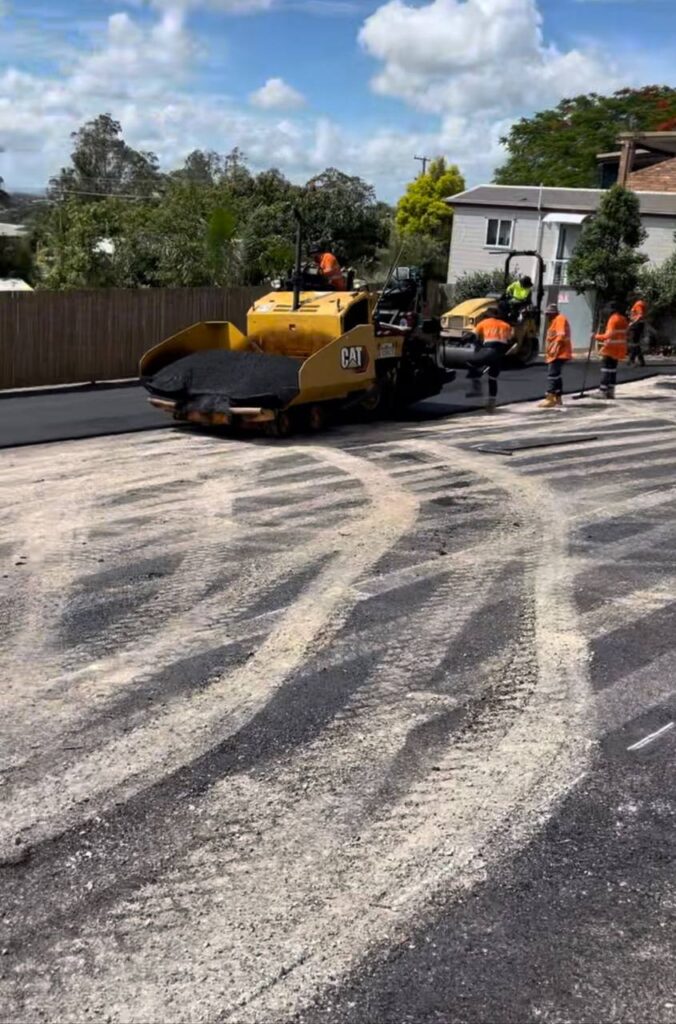
An existing road, driveway or access area can gradually deteriorate as traffic, weather exposure and everyday use affect the pavement. Even when the underlying structure remains stable, the surface may begin to lose its original condition, allowing moisture to penetrate and increasing the likelihood of further wear.
Spray and seal bitumen provides a practical way to protect suitable existing pavements by applying a bituminous binder and aggregate to create a renewed wearing surface. When professionally installed over a properly prepared foundation, this treatment can help reduce water penetration, protect the underlying pavement and improve the surface’s ability to withstand regular traffic.
For property owners and businesses in Morayfield, QLD, understanding how spray and seal works can help determine whether an existing surface would benefit from renewal. At Morayfield Surfacing Solutions, we assess pavement condition, drainage and intended use before recommending an appropriate bitumen surfacing solution.
What Is Spray and Seal Bitumen?
Spray and seal is a pavement surfacing method that involves applying a controlled layer of bituminous binder to a prepared surface, followed by an even distribution of aggregate.
The aggregate is then rolled into the binder to establish a bonded wearing surface.
Unlike asphalt, which consists of aggregate and bituminous binder mixed together before placement, spray and seal forms its surface through separate applications of binder and stone.
The finished treatment provides a protective wearing layer over the prepared pavement.
Its effectiveness depends on several factors, including the condition of the existing surface, binder application, aggregate selection, rolling and the stability of the pavement underneath.
1. It Helps Reduce Water Penetration
One of the main benefits of spray and seal bitumen is its ability to help limit water entering the pavement from above.
Water penetration is a common contributor to pavement deterioration. When moisture reaches supporting materials through cracks, open areas or damaged sections, it can reduce their stability.
As vehicles repeatedly travel across weakened pavement, movement can develop and eventually affect the surface.
How Does Spray and Seal Help?
The bituminous binder creates a water-resistant layer over a suitable prepared surface.
Combined with the aggregate, it forms a protective treatment that helps reduce direct exposure of the underlying pavement to rainfall.
However, spray and seal should not be considered a substitute for correcting drainage problems or repairing significant pavement damage.
Water can still enter through damaged areas, poorly maintained edges or defects that develop over time.
Effective protection depends on the condition of the pavement before treatment and the ongoing integrity of the finished surface.
2. It Protects the Existing Pavement from Direct Traffic Wear
Regular vehicle movements gradually affect road and driveway surfaces.
Tyres place repeated pressure on the pavement, while turning, braking and acceleration introduce additional forces.
Without a suitable wearing surface, these movements can contribute to the displacement of loose material and gradual deterioration.
Spray and seal creates a bonded aggregate layer designed to receive normal traffic wear.
This helps protect the prepared pavement underneath from direct tyre contact.
Why Is the Aggregate Important?
The aggregate is not simply added for appearance.
It provides the textured wearing surface that vehicles travel across, while the bituminous binder holds the stones in place.
Correct aggregate selection, distribution and embedment are important for achieving a consistent surface.
If aggregate is poorly bonded, traffic can dislodge stones and leave sections of the underlying treatment exposed.
Professional application therefore plays an important role in the effectiveness of the finished surface.
3. It Can Help Preserve a Structurally Sound Existing Road
An ageing road does not necessarily need complete reconstruction.
Sometimes the upper surface has deteriorated while the pavement underneath remains stable enough to continue supporting traffic.
In these circumstances, spray and seal may provide a suitable method of renewing the wearing surface.
The treatment can help preserve the existing pavement by providing a protective layer over a properly prepared foundation.
This is particularly relevant where the main concerns involve general surface wear rather than extensive structural failure.
Before application, however, the pavement should be checked for:
- Deep rutting
- Significant cracking
- Potholes
- Unstable patches
- Settlement
- Loose material
- Drainage problems
- Weak pavement edges
These conditions may require attention before the surface is sealed.
4. It Reduces Direct Exposure of the Base to Weather
The pavement base provides essential support beneath the finished surface.
When the upper layer deteriorates, the supporting material can become increasingly exposed to rainfall and traffic.
This can contribute to the loss of finer particles, erosion and surface instability.
A properly installed spray and seal treatment helps protect the prepared base by providing a bonded wearing layer above it.
Why Does Base Protection Matter?
The base is responsible for distributing traffic loads and supporting the pavement.
If it becomes unstable, the finished surface can develop problems regardless of how well the upper treatment was originally applied.
Protecting a stable base is therefore an important part of preserving the pavement’s overall condition.
Spray and seal works most effectively when the supporting material has already been correctly prepared and compacted.
5. It Can Reduce Loose Surface Material
Unsealed or deteriorating access areas can develop loose stones and displaced surface material.
Regular traffic can move this material into wheel paths, turning areas and pavement edges.
A properly applied spray and seal treatment binds the selected aggregate into the bituminous layer, creating a more consistent wearing surface.
This can reduce the amount of loose material associated with an untreated or deteriorated pavement.
Some excess aggregate may be present during the early life of a newly sealed surface, depending on the application. This is different from ongoing aggregate loss caused by poor bonding or deterioration.
The finished surface should be monitored for unusual or increasing stone loss.
6. It Helps Establish a Consistent Surface Texture
Surface texture influences how vehicles interact with the pavement.
A worn road may contain areas with different textures, exposed base material or irregular aggregate coverage.
Spray and seal can provide a more consistent aggregate wearing surface across a properly prepared area.
The aggregate contributes to surface texture and tyre grip, although actual performance depends on aggregate properties, application quality, traffic and pavement condition.
Consistent preparation and application are particularly important in regular traffic areas.
7. It Can Renew an Ageing Bitumen Surface
An existing sprayed bitumen surface can gradually lose aggregate or become worn through continued use.
Where the underlying pavement remains stable, resealing may be an appropriate way to renew its protective wearing layer.
This involves assessing the existing treatment and preparing the surface before applying a new seal.
When Might Resealing Be Appropriate?
Signs that an existing bitumen surface may benefit from assessment include:
- Widespread surface wear
- Increasing aggregate loss
- Areas of exposed binder
- A noticeably inconsistent surface texture
- Localised deterioration
- Ageing of the existing treatment
These signs do not automatically mean resealing is suitable.
The pavement underneath must still be capable of supporting the new treatment, and significant defects should be addressed beforehand.
Why Is Surface Preparation Essential?
Spray and seal bitumen cannot compensate for an unstable foundation.
If the existing pavement contains weak material, deep potholes or substantial deformation, applying a new surface treatment may temporarily improve its appearance without correcting the cause of deterioration.
Professional preparation can involve removing loose material, repairing damaged sections, correcting levels and ensuring the pavement is suitable for sealing.
The exact work depends on the condition of the existing surface.
A Stable Base Supports a Better Finished Result
Before spray and seal is applied, the supporting pavement needs to provide consistent stability.
Where necessary, grading and compaction help establish the required profile and support.
If the pavement is uneven because of deeper structural movement, additional preparation may be required.
The objective is to provide a stable foundation that allows the bituminous binder and aggregate to perform as intended.
Drainage Should Be Considered Before Spray and Seal
A protective surface treatment works best when water can drain away effectively.
If an existing road contains low areas that regularly collect rainfall, sealing the surface without addressing those levels may leave an ongoing problem.
Standing water can place additional demands on the pavement, particularly where existing defects or weak edges allow moisture to enter.
Before treatment, contractors should assess:
- Existing surface falls
- Areas of standing water
- Wheel ruts
- Depressions
- Eroded edges
- Drainage paths
- Sections affected by repeated moisture exposure
Where necessary, grading or localised preparation can help establish a more suitable surface profile before sealing.
How Does Professional Application Improve Protection?
The performance of spray and seal depends on correct installation.
The process requires more than applying bitumen and spreading aggregate across the road.
Several stages need to be coordinated carefully.
Preparing the Surface
The existing pavement is assessed and prepared to provide suitable conditions for the treatment.
Loose material, unstable areas and significant defects need to be addressed.
Applying the Bituminous Binder
The binder is applied at a rate appropriate to the selected treatment, aggregate and pavement conditions.
Consistent application is important for achieving an effective bond.
Distributing the Aggregate
Aggregate is spread across the binder to establish the required coverage.
Uneven distribution can result in areas with excess loose stone or insufficient aggregate.
Rolling the Surface
Rolling helps embed the aggregate into the binder and establish the bonded wearing layer.
The finished treatment then needs to be managed appropriately as it establishes under the relevant site and traffic conditions.
Each stage contributes to the quality and performance of the surface.
Is Spray and Seal Suitable for Every Existing Pavement?
Not necessarily.
Spray and seal is most appropriate where the existing pavement provides a stable foundation and the proposed treatment is suitable for the expected traffic.
It is not designed to correct major structural failures.
For example, a road containing widespread deep rutting, unstable base material or significant settlement may require more substantial preparation before any surface treatment is considered.
Similarly, a heavily used turning area or a location carrying concentrated loads may need a pavement solution specifically designed for those demands.
Professional assessment helps determine whether spray and seal, asphalt surfacing or more extensive pavement preparation is appropriate.
Spray and Seal Versus Asphalt Resurfacing
Both spray and seal and asphalt can be used to improve suitable pavement surfaces, but they are not interchangeable.
Spray and seal provides a relatively thin protective wearing treatment using sprayed bituminous binder and aggregate.
Asphalt resurfacing involves placing and compacting a layer of asphalt mixture over a suitably prepared pavement.
The appropriate method depends on the existing structure, surface condition, traffic requirements and intended use.
A stable road requiring renewed surface protection may be suitable for spray and seal, while other sites may benefit from an asphalt layer or deeper pavement work.
The decision should be based on the condition and requirements of the site rather than appearance alone.
How Can You Tell Whether Your Existing Surface Needs Attention?
Early deterioration can sometimes be overlooked because the road or driveway remains usable.
However, increasing surface wear may indicate that maintenance should be considered before more extensive damage develops.
Warning signs include:
- Loose or missing aggregate
- Small potholes
- Cracking
- Uneven surface texture
- Water collecting in low areas
- Erosion along the edges
- Repeated deterioration in wheel paths
The most useful approach is to identify whether these problems are confined to the upper surface or extend into the supporting pavement.
A professional assessment can establish whether surface renewal is appropriate or whether repairs are needed first.
Why Choose Professional Spray and Seal Surfacing?
The effectiveness of spray and seal depends on the condition of the pavement and the quality of the application.
Incorrect preparation, unsuitable materials or inconsistent installation can affect aggregate retention and the performance of the finished treatment.
At Morayfield Surfacing Solutions, we assess spray and seal bitumen projects in Morayfield, QLD, with attention to existing pavement stability, drainage, surface preparation and traffic requirements.
This helps determine whether the pavement is suitable for sealing and what preparation should be completed before the new treatment is applied.
The aim is to provide a practical surfacing solution that protects the existing pavement where it remains serviceable.
Conclusion
Spray and seal bitumen protects a suitable existing surface by creating a bonded aggregate wearing layer over the prepared pavement. This helps reduce water penetration, protects the underlying material from direct traffic wear and provides a more consistent surface texture.
It can be particularly useful for renewing ageing bitumen surfaces and protecting roads where the supporting pavement remains stable.
However, the treatment is only as effective as the foundation underneath it. Significant potholes, deep rutting, unstable sections and drainage problems should be addressed before sealing rather than simply covered.
For property owners and businesses in Morayfield, QLD, Morayfield Surfacing Solutions provides professional asphalt and bitumen surfacing, including spray and seal applications suited to the condition and intended use of the pavement.
If your existing road, driveway or access surface is beginning to deteriorate, contact Morayfield Surfacing Solutions to arrange an assessment and discuss whether spray and seal bitumen is an appropriate way to protect and renew it.
Call us on: 07 3113 9873
Click here to find out more about Morayfield Surfacing Solutions
Click here to complete our contact form and see how we can help with your surfacing needs.