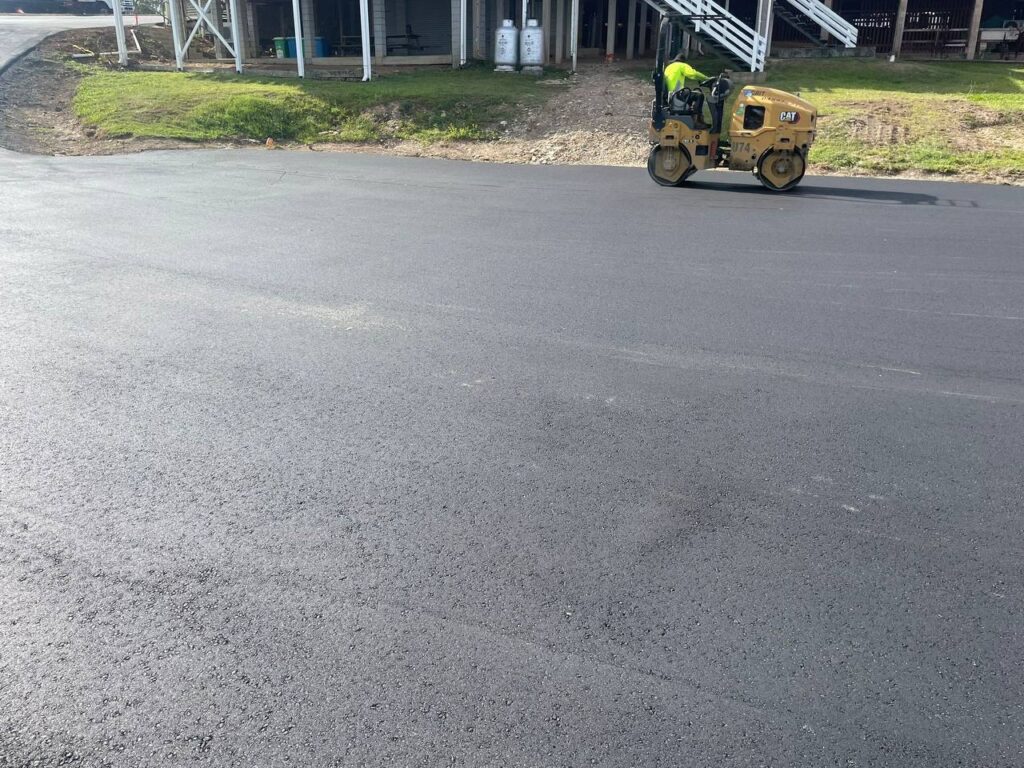
Effective drainage is fundamental to the performance of any road. While drains and surrounding infrastructure have an important role, the shape and profile of the road itself determine where rainfall travels once it reaches the surface. When a road is poorly graded, water can collect in low areas, flow in the wrong direction or remain against vulnerable pavement edges, gradually contributing to deterioration.
For roads and access surfaces in Morayfield, QLD, correct grading should be considered part of the pavement structure rather than simply a finishing detail. At Morayfield Surfacing Solutions, we provide professional grading, asphalt and bitumen surfacing services with a focus on creating stable surfaces that manage water effectively and perform reliably over the long term.
What Does Road Grading Actually Do?
Road grading involves shaping the pavement or underlying base to establish the required levels, slopes and surface profile.
One of its most important purposes is to control water movement. A correctly graded road encourages rainfall to move away from traffic areas and towards appropriate drainage points rather than remaining on the pavement.
Professional grading can help establish:
- Consistent surface levels
- Appropriate crossfall
- Smooth transitions between sections
- Effective runoff
- Stable pavement preparation
These characteristics are important during new road construction as well as the maintenance and rehabilitation of existing surfaces.
Poor Grading Creates Low Points
One of the clearest signs of unsuitable grading is water pooling after rainfall.
If sections of a road are lower than the surrounding pavement, water naturally collects in these depressions. Instead of draining efficiently, it may remain until it evaporates or gradually penetrates vulnerable sections of the surface.
Low points can develop because of unsuitable initial grading, but they can also appear later due to settlement, rutting or movement within the pavement.
Persistent puddles should therefore be treated as more than an inconvenience. They can indicate that the road profile is no longer managing water effectively.
Standing Water Can Accelerate Surface Deterioration
Asphalt and bitumen surfaces are designed to withstand outdoor conditions, but prolonged exposure to standing water can contribute to deterioration, particularly where cracks or other defects already exist.
Water can enter through:
- Surface cracks
- Damaged pavement edges
- Potholes
- Construction joints
- Deteriorated sections
Once moisture reaches the supporting pavement layers, the road can become more vulnerable to movement and deformation under traffic.
Maintaining effective drainage helps limit this process.
Poor Drainage Can Contribute to Potholes
Potholes are often the visible result of deterioration that began below or within the pavement.
The process can start when water enters through a crack or weakened area. If the supporting materials lose stability, the asphalt above receives less consistent support. Repeated vehicle loading then causes the affected surface to flex and break apart.
Eventually, material becomes loose and is displaced by traffic, leaving a pothole.
Repairing the pothole without considering the drainage conditions around it may allow the same problem to develop again.
Water Flow Can Damage Road Edges
Poor grading does not always result in obvious puddles. Sometimes the problem is concentrated water flowing along the wrong part of the road.
If rainfall is repeatedly directed towards pavement edges, it can contribute to erosion and gradually reduce the support available to the sealed surface.
As edge support deteriorates, the pavement may begin to:
- Crack
- Crumble
- Drop away
- Lose structural support
- Allow additional moisture underneath
Correct road profiling helps guide water away from vulnerable areas rather than concentrating it where damage is more likely.
Rutting Can Make Drainage Problems Worse
Ruts are depressions that form along frequently travelled wheel paths.
Once established, these channels can trap or direct water along the road instead of allowing it to move towards appropriate drainage areas. Water remaining within ruts can then contribute to further deterioration.
This creates a cycle where pavement deformation causes poor drainage, and poor drainage contributes to additional pavement deformation.
Professional grading may help restore the correct profile where the pavement structure and surface type are suitable.
Grading Matters Before Asphalt or Bitumen Is Applied
Correct grading is particularly important during pavement construction.
Installing a high-quality asphalt or bitumen surface over a poorly shaped base does not eliminate problems with levels underneath. If the foundation contains unsuitable low points or incorrect falls, drainage issues may remain after surfacing.
Proper preparation should establish the required road profile before the final surface is applied.
This helps the completed pavement manage rainfall as intended from the beginning.
Drainage Protects the Pavement Foundation
The strength of a road depends heavily on the materials beneath the visible surface.
A stable pavement base distributes vehicle loads and provides consistent support. Excessive moisture within these layers can reduce their ability to perform effectively.
Good grading therefore protects more than the asphalt itself. By directing water away efficiently, it helps preserve the foundation supporting the entire road.
This is one reason why drainage and pavement construction should be considered together.
Warning Signs Your Road May Have a Grading Problem
Property owners do not need to wait for major pavement failure before investigating drainage.
Warning signs can include:
- Puddles remaining after rainfall
- Water repeatedly crossing the same section
- Ruts holding water
- Erosion beside pavement edges
- Recurring potholes in low areas
- Soft or unstable sections
- Uneven surface levels
- Water travelling towards areas where it should drain away
If several of these issues are present, professional assessment can help establish whether grading is contributing to the problem.
Can Regrading Fix an Existing Road?
In suitable circumstances, regrading can restore the profile of an existing road and improve drainage.
For unsealed roads, grading may be used to reshape the driving surface, correct ruts and restore appropriate falls. During rehabilitation or preparation for asphalt and bitumen surfacing, grading can also establish the correct base profile before further pavement work is completed.
However, grading alone cannot repair every problem.
If prolonged drainage issues have already caused significant foundation deterioration, damaged materials may need to be repaired or replaced before the surface is reshaped and resurfaced.
Why the Cause Should Be Fixed Before Resurfacing
A worn road may appear to need nothing more than a fresh asphalt or bitumen surface. If poor grading is responsible for the deterioration, resurfacing without correcting the profile can leave the original drainage problem unresolved.
Water may simply begin collecting on the renewed pavement, eventually contributing to similar defects.
A more effective approach is to assess:
- Why the existing pavement deteriorated
- Where rainfall currently travels
- Whether low points are present
- Whether the base remains stable
- What grading or drainage improvements are required
Once these factors are understood, the appropriate surfacing work can be planned around them.
Professional Grading Supports Better Long-Term Performance
Road grading requires more than making a surface appear level. In fact, a completely flat road may itself create drainage difficulties.
The objective is to create the correct profile for the particular site so that traffic can use the road comfortably while rainfall is directed away effectively.
At Morayfield Surfacing Solutions, we assess road and pavement projects throughout Morayfield, QLD with consideration for grading, drainage, foundation condition and intended traffic. By addressing these factors together, we can provide asphalt and bitumen surfacing solutions designed around the actual requirements of the site.
Conclusion
Poorly graded roads can create significant drainage problems by allowing water to pool, directing runoff towards vulnerable pavement areas and preventing rainfall from leaving the surface efficiently. Over time, these conditions can contribute to cracking, potholes, edge deterioration, rutting and weakening of the pavement foundation.
Correct grading establishes the road profile needed to manage water effectively and support long-term pavement performance. For property owners and businesses in Morayfield, QLD, Morayfield Surfacing Solutions provides professional grading, asphalt and bitumen surfacing services tailored to the condition of each site. If your road regularly holds water or is developing recurring surface problems, our experienced team can assess the pavement and recommend a practical solution designed to improve drainage and restore reliable performance.
Call us on: 07 3113 9873
Click here to find out more about Morayfield Surfacing Solutions
Click here to complete our contact form and see how we can help with your surfacing needs.