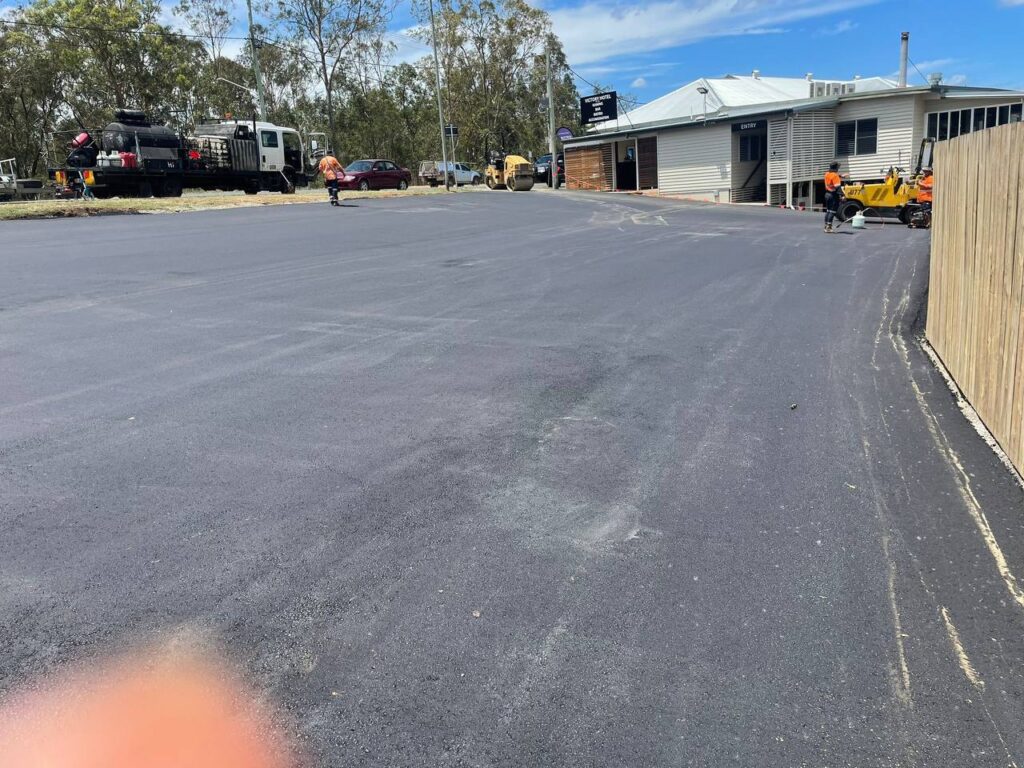
Potholes are among the most common signs of deterioration in asphalt and bitumen surfaces. What may begin as a small crack or shallow depression can gradually develop into an opening that affects vehicle movements, drainage and the surrounding pavement. Although potholes often appear to form suddenly, the underlying damage usually develops over time.
Several factors can contribute to pothole formation, including water penetration, repeated vehicle loading, weakened road bases, poor drainage and ageing surface materials. Understanding these causes is important because repairing the visible hole without addressing the underlying problem can allow deterioration to return.
For property owners and businesses in Morayfield, QLD, recognising the early warning signs of pavement damage can help prevent relatively small defects from becoming more extensive. At Morayfield Surfacing Solutionsg, we focus on identifying the causes of asphalt and bitumen deterioration so that repairs address the condition of the pavement rather than simply covering the damage.
How Do Potholes Develop in Asphalt and Bitumen Surfaces?
A pothole forms when part of a pavement breaks apart and material becomes displaced, leaving an opening in the road or driveway.
This usually happens through a combination of surface deterioration and repeated vehicle loading.
As cracks develop, rainfall can enter the pavement and affect the supporting layers. If the material underneath becomes unstable, the asphalt or bitumen surface may begin moving under traffic.
Continued loading can cause cracks to widen and sections of the surface to break away.
Once material has been displaced, vehicle tyres can enlarge the opening and accelerate further deterioration.
The speed at which a pothole develops depends on the pavement condition, traffic demands, drainage and extent of the underlying weakness.
1. Water Penetrating Through Cracks
Water penetration is a major contributor to pothole formation.
Asphalt and bitumen surfaces are designed to protect the pavement underneath, but cracks and damaged areas can create openings through which rainfall enters.
When moisture reaches the supporting materials, it can affect their stability.
Repeated traffic over a weakened section can then cause movement, cracking and eventual surface failure.
This process is particularly concerning where rainfall regularly collects in existing depressions.
A small crack may initially appear harmless, but allowing water to repeatedly enter through it can contribute to more substantial deterioration.
2. Weak or Poorly Compacted Road Bases
The visible asphalt or bitumen surface depends on the strength of the pavement underneath.
A properly constructed road base distributes vehicle loads and provides a stable foundation.
If the base contains unsuitable material, weak sections or inadequate compaction, it may gradually move under traffic.
This movement places additional stress on the surface above.
Over time, cracks can develop and the pavement may begin breaking apart.
A pothole caused by base instability often requires more than a simple surface patch because the underlying support must also be restored.
3. Repeated Vehicle Loading
Every vehicle travelling across a road or driveway places pressure on the pavement.
When the surface and supporting layers are properly constructed, they distribute these loads effectively.
However, repeated traffic can accelerate deterioration where existing weaknesses are present.
Areas particularly vulnerable to concentrated loading include:
- Regular wheel paths
- Driveway entrances
- Vehicle turning areas
- Loading and unloading zones
- Commercial access roads
- Sections frequently used by heavier vehicles
Once a crack or depression develops in one of these locations, continued traffic can cause the surrounding pavement to deteriorate further.
4. Poor Drainage and Standing Water
Drainage plays an important role in maintaining asphalt and bitumen surfaces.
A road or driveway should have suitable levels that allow rainfall to drain away rather than collect in isolated areas.
When water regularly remains on the surface, it can increase the amount of moisture reaching existing cracks and damaged sections.
If the supporting material becomes weakened, traffic loading may contribute to settlement and pothole formation.
Standing water can also make small defects less noticeable until the damage becomes more extensive.
Correcting the drainage conditions is therefore an important consideration when repairing recurring potholes.
5. Ageing Asphalt and Bitumen Surfaces
Asphalt and bitumen surfaces gradually change through exposure to sunlight, rainfall, temperature variations and traffic.
Over time, the bituminous binder can age, and the surface may become more vulnerable to cracking or aggregate loss.
These changes do not automatically mean the pavement has failed.
However, they can make it easier for water to enter once defects develop.
Where an ageing surface also experiences heavy traffic or poor drainage, deterioration may progress more quickly.
Timely maintenance can help preserve a structurally sound pavement before widespread damage occurs.
6. Existing Cracks That Are Left Unrepaired
Cracking is often one of the earliest visible signs that a pavement needs attention.
Some cracks are relatively minor, while others indicate movement within the supporting layers.
When cracks remain open, they can allow water and debris to enter the pavement.
Repeated vehicle movements can place stress on the crack edges, causing them to widen or break away.
Eventually, the affected section may develop into a pothole.
Early crack treatment can help reduce water penetration where the surrounding pavement remains structurally stable.
However, cracks caused by deeper pavement movement may require more substantial repairs.
7. Deterioration Around Previous Repairs
Potholes can sometimes reappear in areas that have already been patched.
This does not necessarily mean that every previous repair was unsuitable. However, recurring deterioration can indicate that the underlying problem has not been fully resolved.
Possible causes include:
- Weak material remaining beneath the repair
- Inadequate compaction
- Water entering around the patch
- Movement in the surrounding pavement
- Continued heavy traffic
- Poor drainage
- Deterioration along the repair edges
Where potholes repeatedly form in the same location, the pavement should be assessed to determine whether deeper repairs are necessary.
Why Do Small Potholes Become Larger?
Once a pothole develops, the surrounding pavement is exposed to additional stress.
Vehicle tyres repeatedly contact the edges of the opening, which can cause more material to break away.
Rainfall may also collect inside the pothole and penetrate the exposed supporting layers.
As the damaged area becomes wider or deeper, the pavement around it can lose further support.
This creates a cycle of deterioration.
A small opening can therefore become a much larger damaged section if the underlying causes remain unresolved.
Early attention is particularly useful where the surrounding pavement is still stable enough for a localised repair.
Are Potholes More Than a Surface Problem?
Not every pothole indicates significant structural failure.
Some develop primarily because the upper wearing surface has deteriorated.
Others form because the road base or underlying ground has become unstable.
The distinction matters because the appropriate repair method depends on how deeply the damage extends.
Surface-Level Deterioration
Where the supporting pavement remains stable, a localised repair may be sufficient.
The damaged material can be removed, the area prepared and suitable asphalt installed to restore the surface.
Deeper Pavement Failure
Where the underlying material has weakened or moved, the affected section may require excavation and reconstruction.
Simply filling the visible opening may not prevent the problem from returning.
A professional assessment helps determine which approach is appropriate.
What Are the Early Warning Signs of Pothole Formation?
Potholes often develop after other forms of pavement deterioration become visible.
Recognising these warning signs can help property owners arrange maintenance before the damage spreads.
Common indicators include:
- Cracks developing across the surface
- Small areas of loose asphalt
- Aggregate breaking away
- Shallow depressions
- Water collecting in wheel paths
- Uneven pavement levels
- Crumbling edges
- Previous patches beginning to sink
- Small openings appearing after rainfall
These symptoms should be assessed in relation to the wider pavement condition.
A single isolated defect may require a different response from widespread cracking or repeated settlement.
How Are Potholes Professionally Repaired?
Effective pothole repair begins with identifying the extent and cause of the damage.
The objective is not simply to fill the opening but to restore a stable surface that can withstand its intended traffic.
Assessing the Damaged Area
The contractor examines the pothole, surrounding pavement and any signs of base instability.
Drainage, cracking and previous repairs may also be considered.
Removing Unsuitable Material
Loose and deteriorated material is removed to expose a suitable repair area.
Where the supporting pavement has failed, additional excavation may be necessary.
Preparing the Foundation
The underlying material is assessed and prepared.
If required, suitable base material is placed and compacted to restore support.
Installing the Repair Material
Appropriate asphalt is placed to restore the pavement surface.
The repair should connect properly with the surrounding pavement and maintain suitable levels.
Compacting the Repair
Correct compaction helps establish the density and stability needed for the repaired section to perform under traffic.
The completed repair should also maintain appropriate drainage and avoid creating a new depression.
Why Is Proper Compaction Essential?
Compaction is one of the most important parts of pavement repair.
If the material underneath a pothole is not adequately compacted, it may continue settling after the repair has been completed.
This can cause the new surface to sink or crack.
Similarly, poorly compacted asphalt may be more vulnerable to deformation and water penetration.
Professional compaction helps create a consistent repair that is supported by stable material underneath.
The required method depends on the size of the repair, pavement construction and expected vehicle loading.
Can Asphalt Resurfacing Prevent Potholes from Returning?
Resurfacing may be suitable where an existing pavement has widespread surface deterioration but remains structurally sound.
A new asphalt layer can restore a consistent wearing surface and help protect the pavement underneath.
However, resurfacing should not be used to conceal unstable areas.
If potholes have developed because the road base has failed, those sections should be repaired before the new asphalt is installed.
When Is Resurfacing Worth Considering?
Resurfacing may be appropriate when:
- Several areas of the surface are worn
- Cracking is becoming more widespread
- The existing pavement remains generally stable
- Localised defects can be repaired beforehand
- The road requires a renewed wearing surface
- Surface levels can be appropriately prepared
A professional assessment is needed to determine whether resurfacing will provide a suitable result.
When Is More Extensive Road Reconstruction Necessary?
Some pavements deteriorate beyond the point where routine pothole repairs or resurfacing can provide an effective solution.
This may occur where the supporting layers have become extensively weakened.
Signs that deeper reconstruction may be necessary include:
- Widespread structural cracking
- Repeated potholes across several sections
- Significant settlement
- Deep wheel rutting
- Unstable pavement under traffic
- Extensive base deterioration
- Recurring failure after previous repairs
In these circumstances, rebuilding the affected pavement structure may be more appropriate than repeatedly treating the visible damage.
How Can Property Owners Reduce Pothole Formation?
Although all pavements experience wear over time, suitable maintenance can help reduce the likelihood of small defects developing into larger failures.
Useful measures include:
Address Cracks Early
Suitable cracks should be assessed and treated before repeated water penetration contributes to further deterioration.
Maintain Effective Drainage
Rainfall should be able to drain away from the pavement without regularly collecting in low areas.
Repair Small Defects Promptly
Minor potholes and damaged patches are generally easier to address before surrounding material begins breaking away.
Monitor High-Traffic Areas
Entrances, wheel paths and turning areas often experience concentrated loading and should be checked for early signs of deterioration.
Maintain Pavement Edges
Unsupported or eroded edges can become vulnerable to cracking and material loss.
Arrange Professional Assessment When Problems Return
Recurring potholes may indicate deeper pavement weaknesses that require more than surface patching.
Why Professional Pothole Repairs Make a Difference
A pothole may appear to be a simple opening in the road, but the visible damage does not always reveal the full condition of the pavement underneath.
Professional repair work considers the cause of deterioration, the stability of the surrounding material and the demands placed on the finished surface.
At Morayfield Surfacing Solutionsg, we assess damaged asphalt and bitumen pavements in Morayfield, QLD, to determine whether localised repairs, resurfacing or more substantial preparation is appropriate.
By addressing the underlying condition of the pavement, the repair can be planned to restore dependable vehicle access rather than simply improve the appearance of the damaged area.
Why Should Potholes Be Repaired Before They Spread?
Delaying pothole repairs can allow traffic and rainfall to affect a larger section of pavement.
As the opening expands, surrounding asphalt may crack or break away, and more supporting material can become exposed.
This can turn a relatively localised defect into a broader pavement problem.
Early assessment allows the condition to be addressed while the surrounding pavement may still be suitable for preservation.
It also provides an opportunity to identify drainage or base weaknesses before they contribute to further deterioration.
Conclusion
Potholes form when asphalt or bitumen pavement deteriorates and material breaks away under traffic. Water penetration, weak road bases, poor drainage, repeated vehicle loading and ageing surface materials are among the main contributing factors.
Although potholes may appear suddenly, the conditions responsible for their formation often develop gradually. Cracking, loose aggregate, depressions and recurring water accumulation can all provide early indications that the pavement needs attention.
Effective pothole repair depends on identifying whether the damage is confined to the surface or extends into the supporting layers. Localised patching may be suitable for stable pavement, while deeper repairs or resurfacing may be necessary where deterioration is more extensive.
For property owners and businesses in Morayfield, QLD, Morayfield Surfacing Solutionsg provides professional asphalt and bitumen surfacing, including pothole repairs and pavement restoration suited to the condition of the existing surface.
If potholes are beginning to appear on your driveway, access road or commercial pavement, contact Morayfield Surfacing Solutionsg to arrange an assessment and discuss the appropriate repair solution before the damage spreads.
Call us on: 07 3113 9873
Click here to find out more about Morayfield Surfacing Solutions
Click here to complete our contact form and see how we can help with your surfacing needs.