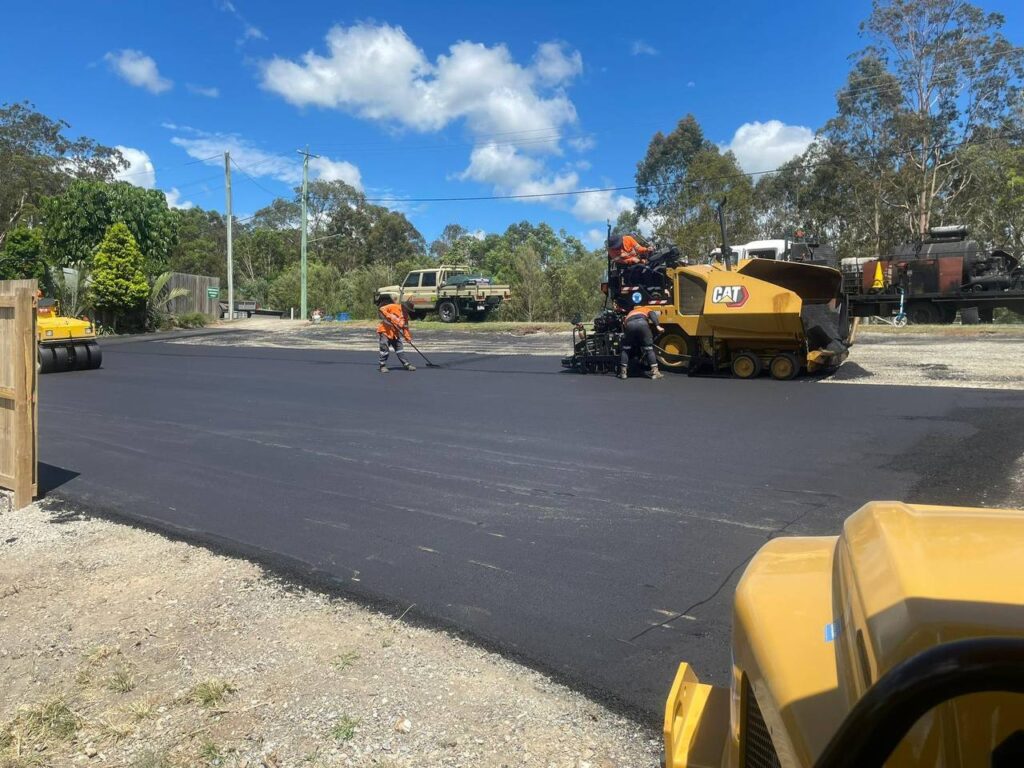
Water is one of the most persistent threats to the long-term condition of a road. A pavement may appear strong from the surface, but once moisture begins reaching the supporting layers underneath, deterioration can accelerate. Cracking, potholes, soft areas and surface deformation can all develop when water is allowed to repeatedly enter a pavement structure.
For roads and access surfaces in Morayfield, QLD, managing moisture should therefore be considered as part of the pavement itself rather than simply a drainage issue. Spray & seal bitumen can play an important role by creating a sealed wearing surface that limits water penetration while providing a durable layer for regular vehicle traffic.
What Is Spray & Seal Bitumen?
Spray & seal is a road surfacing method in which a controlled application of bitumen binder is sprayed over a properly prepared pavement. Selected aggregate is then spread across the bitumen and rolled firmly into place.
The two materials perform complementary functions:
- Bitumen forms a water-resistant binding and sealing layer
- Aggregate provides the textured wearing surface for vehicle traffic
- Rolling embeds the aggregate into the binder
- The prepared pavement underneath provides structural support
When these elements are correctly combined, the finished surface helps protect the pavement from both traffic wear and moisture.
Why Is Water So Damaging to Roads?
The problem with water is not necessarily the rainfall that lands on the road. A properly designed pavement should be capable of dealing with ordinary exposure to wet weather.
Problems develop when water remains on the pavement or penetrates through openings into the layers underneath.
Moisture Can Weaken the Pavement Base
The surface of a road depends on stable support beneath it. If underlying pavement materials become saturated or eroded, their ability to support vehicle loads can be reduced.
Traffic continues placing pressure on the weakened area, which can eventually result in movement at the surface.
Signs may include:
- Depressions
- Rutting
- Cracking
- Loose pavement material
- Potholes
Preventing unnecessary water infiltration is therefore an important part of preserving the entire road structure.
Spray & Seal Creates a Protective Barrier
One of the primary functions of bitumen in a spray & seal surface is to create a continuous seal across the prepared pavement.
This barrier limits the amount of surface water that can penetrate directly into the underlying layers.
Why Keeping the Base Drier Matters
A stable base distributes vehicle loads and supports the surface above. Protecting that base from excessive moisture helps it continue performing this role.
Rather than waiting for water-related deterioration to become visible, a properly constructed sealed surface provides preventative protection.
Spray & Seal Helps Close the Surface to Moisture
Unsealed pavement surfaces can allow water to move through voids between loose particles. During repeated rainfall, moisture can reach progressively deeper sections of the pavement.
Applying spray & seal changes the way the surface responds to water.
The bitumen binds the aggregate and closes much of the exposed pavement surface, reducing direct infiltration from above. This can make a significant difference to long-term pavement preservation when the underlying structure is already suitable for sealing.
Drainage Still Matters
Spray & seal should not be considered a replacement for effective drainage.
Even a well-sealed road needs to direct rainfall somewhere. If the road has poor levels or substantial depressions, water can remain on the surface for extended periods.
Professional road preparation should therefore consider:
- Road crossfall
- Longitudinal grades
- Low points
- Surface runoff
- Surrounding drainage
- Areas where water regularly accumulates
In Morayfield, QLD, combining a properly shaped pavement with an effective spray & seal surface provides much stronger moisture management than relying on the seal alone.
Grading Helps Water Leave the Road
Correct grading establishes the road profile before sealing occurs. Rather than creating a completely flat surface, the pavement is shaped with appropriate falls that encourage rainfall to move away from traffic areas.
This provides two forms of protection: grading moves water away, while spray & seal helps prevent the remaining surface moisture from penetrating the pavement.
How Water Can Turn Small Defects into Potholes
Potholes are often the final visible stage of deterioration that has been developing for some time.
A small opening in a road surface can allow moisture into the pavement. As the underlying material weakens, repeated vehicle traffic places additional stress on the area. Eventually, surface material may break away and a pothole develops.
Once a pothole forms, even more water can enter the exposed pavement, potentially accelerating the damage.
A well-maintained spray & seal surface helps interrupt this process by limiting opportunities for moisture to reach the underlying structure in the first place.
Aggregate Also Protects the Bitumen Layer
The aggregate applied during spray & seal has an important protective role.
Vehicle tyres do not simply travel directly over an exposed layer of bitumen. Instead, the embedded aggregate forms the primary wearing surface.
This helps protect the binder from direct traffic action while providing a textured surface for vehicle tyres.
Correct aggregate selection and application contribute to:
- Surface durability
- Consistent tyre contact
- Protection of the bitumen binder
- Resistance to everyday traffic wear
A durable wearing surface helps the moisture-resistant seal underneath continue performing effectively.
Preparation Is Essential Before Sealing
Spray & seal performs best when applied to a pavement that has been appropriately prepared.
Placing a seal over severe potholes, unstable material or major drainage problems does not correct those underlying defects.
Before application, the road may require:
Grading
The surface can be reshaped to restore suitable levels and drainage falls.
Pavement Repairs
Failed or weakened sections may need to be repaired before sealing.
Compaction
The prepared base should provide stable support for the finished surface.
Drainage Corrections
Areas that regularly hold water should be investigated so the cause can be addressed.
At Morayfield Surfacing Solutions, looking at these factors before surfacing helps ensure the spray & seal is protecting a pavement that is capable of supporting it.
Spray & Seal Can Help Preserve Existing Roads
Spray & seal is not limited to entirely new roads. Depending on the condition of an existing pavement, it can also form part of a maintenance or resurfacing approach designed to preserve the road before deterioration becomes extensive.
The important consideration is timing.
If the pavement remains structurally suitable, sealing the surface can help protect it against continued moisture exposure and traffic wear. If significant base failure has already occurred, those sections may need more substantial work first.
This is why assessing the existing road is more useful than choosing a treatment based only on its visible appearance.
Signs Water May Already Be Affecting a Road
Property owners should pay attention to changes that occur during and after wet weather.
Warning signs can include:
- Water repeatedly pooling in the same locations
- Potholes developing after rainfall
- Cracks becoming larger or more numerous
- Soft areas appearing in the pavement
- Surface material washing away
- Rutting becoming more pronounced
- Road edges beginning to erode
These symptoms do not all have the same cause, but they provide good reasons to have the pavement and its drainage assessed.
Why Professional Application Matters
The effectiveness of spray & seal depends on much more than applying bitumen and stone.
Bitumen application rates, aggregate selection, pavement condition, rolling, weather conditions and preparation all influence the finished result. The surface also needs to suit the traffic demands placed upon it.
Professional installation brings these elements together as part of one pavement system.
For roads in Morayfield, QLD, Morayfield Surfacing Solutions considers the condition of the existing surface, drainage requirements and intended use before determining the appropriate surfacing approach.
Ongoing Maintenance Protects the Seal
Although spray & seal provides valuable protection against water, the surface should still be inspected periodically.
Traffic and environmental exposure can gradually produce wear. Small defects should be addressed before they provide pathways for moisture to reach the pavement underneath.
Useful maintenance includes monitoring:
- Developing surface defects
- Drainage performance
- Localised aggregate loss
- Road edges
- Areas of unusual wear
Preventative attention helps preserve the integrity of the sealed surface and supports longer pavement life.
Conclusion
Spray & seal bitumen protects roads from water damage by creating a sealed surface that limits moisture penetration into the pavement structure. Combined with durable aggregate, appropriate grading and effective drainage, it helps protect the supporting base while providing a practical surface for regular vehicle traffic.
The best results come from treating water management as part of the entire road construction process. A seal cannot compensate for a severely weakened foundation or unresolved drainage problem, which makes professional assessment and preparation particularly important.
For roads and access surfaces in Morayfield, QLD, Morayfield Surfacing Solutions can assess the existing pavement and determine whether spray & seal bitumen is appropriate for improving surface protection and long-term performance. If your road is showing signs of water-related wear or you are considering resurfacing, professional advice can help identify the most suitable next step.
Call us on: 07 3113 9873
Click here to find out more about Morayfield Surfacing Solutions
Click here to complete our contact form and see how we can help with your surfacing needs.